Start Your Future in Construction
EXPLORE REAL CONSTRUCTION CAREERS, WORK ON INFRASTRUCTURE PROJECTS, AND BUILD SKILLS THAT EMPLOYERS VALUE
The INCAP Civil Construction Specialist occupation gives high school students hands-on experience while they explore careers in construction, infrastructure, inspection, and project coordination. Students work alongside experienced construction professionals while helping support real projects that improve communities.
Start with industry training and safety certification through the Indiana Construction Roundtable Foundation (ICRF)
Gain hands-on experience on active construction projects and jobsites
Learn how construction projects are planned, inspected, documented, and coordinated
Build technical, professional, and safety skills that prepare you for careers throughout the construction industry
What You'll Earn
- High school diploma with Employment Honors Plus seal
- INCAP credential, recognized by construction companies in Indiana
- OSHA 10 certification
- First Aid/CPR certification
Is This Apprenticeship Right For You?
This could be a great fit if you…
Enjoy hands-on work and being outdoors in active work environments
Like solving problems and adapting to changing jobsite conditions
Are interested in construction, engineering, heavy equipment, logistics, or project coordination
Work well with teams and communicate effectively with others
What You'll Actually Do

KEEP CONSTRUCTION PROJECTS SAFE
Learn OSHA construction safety standards and jobsite expectations
Identify workplace hazards and safety risks
Participate in safety briefings and hazard assessments
Follow environmental and safety requirements on active job sites
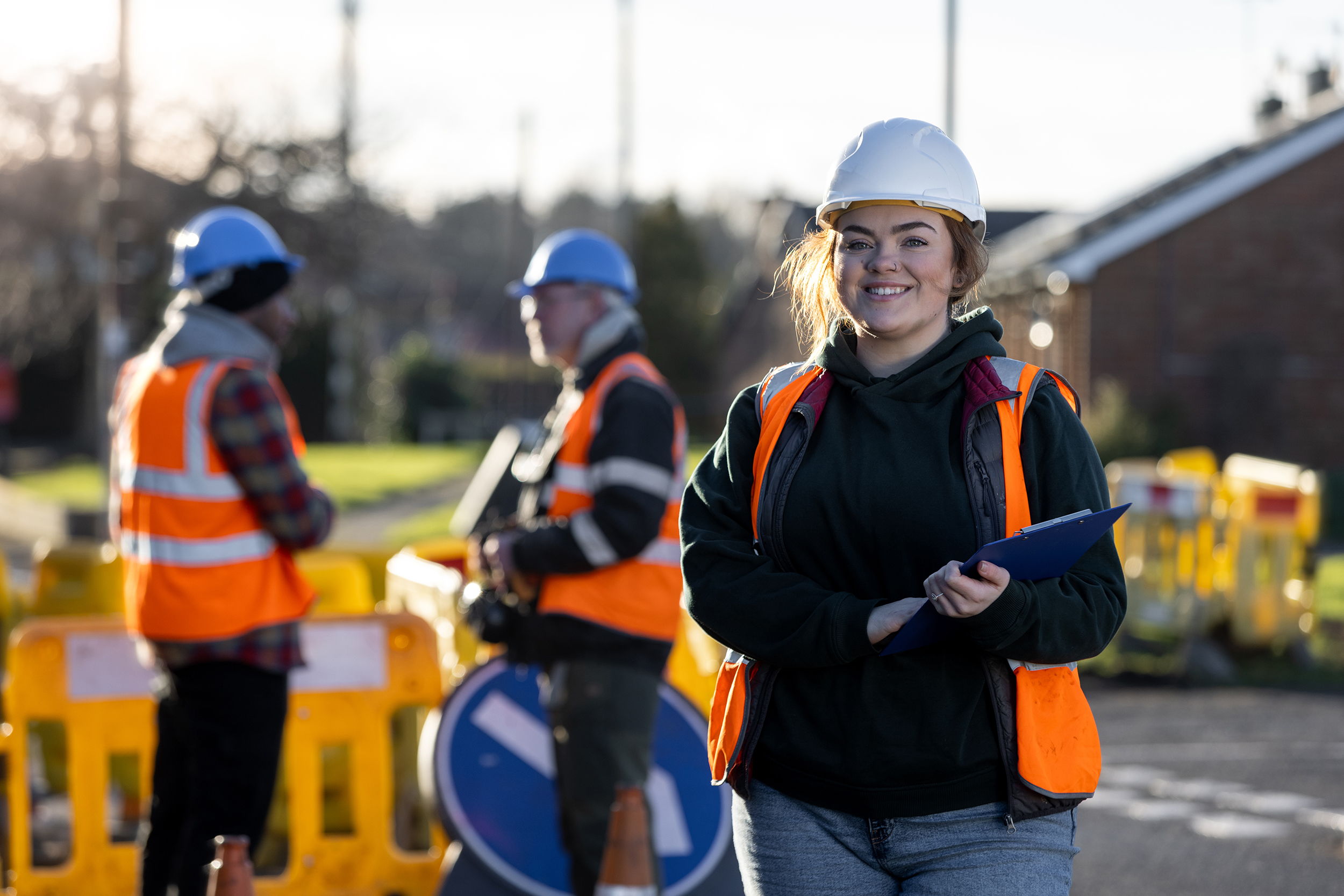
SUPPORT REAL CONSTRUCTION PROJECTS
Participate in daily construction activities under supervision
Help with material movement and site logistics
Use measurement, estimation, and construction math skills
Learn about construction materials, tools, and equipment

ENSURE PROJECTS MEET EXPECTATIONS
Learn how construction inspections are performed
Compare field conditions to plans and specifications
Observe testing and quality-control activities
Identify and communicate quality concerns when they arise

KEEP PROJECT INFORMATION ACCURATE AND ORGANIZED
Complete field reports and inspection logs
Record quantities, observations, and project conditions
Maintain project records and documentation
Capture and organize project information using digital tools

WORK AS PART OF A CONSTRUCTION TEAM AND BUILD REAL-WORLD SKILLS
Communicate with supervisors, inspectors, contractors, and team members
Practice teamwork and collaboration in a professional work environment
Develop responsibility, professionalism, and strong work habits
Build confidence working on real projects with experienced professionals
KEEP CONSTRUCTION PROJECTS SAFE
Learn OSHA construction safety standards and jobsite expectations
Identify workplace hazards and safety risks
Participate in safety briefings and hazard assessments
Follow environmental and safety requirements on active job sites
SUPPORT REAL CONSTRUCTION PROJECTS
Participate in daily construction activities under supervision
Help with material movement and site logistics
Use measurement, estimation, and construction math skills
Learn about construction materials, tools, and equipment
ENSURE PROJECTS MEET EXPECTATIONS
Learn how construction inspections are performed
Compare field conditions to plans and specifications
Observe testing and quality-control activities
Identify and communicate quality concerns when they arise
KEEP PROJECT INFORMATION ACCURATE AND ORGANIZED
Complete field reports and inspection logs
Record quantities, observations, and project conditions
Maintain project records and documentation
Capture and organize project information using digital tools
WORK AS PART OF A CONSTRUCTION TEAM AND BUILD REAL-WORLD SKILLS
Communicate with supervisors, inspectors, contractors, and team members
Practice teamwork and collaboration in a professional work environment
Develop responsibility, professionalism, and strong work habits
Build confidence working on real projects with experienced professionals
Typical Apprenticeship Timeline

Summer
Students are required to participate in an 80-hour Construction Foundations Experience

11th Grade
3 days/week at employer and 2 days/week in school
Paid work $10-20/hour

Summer
Students have the option to work up to full-time during the summer, but it is not required
Paid work $10-20/hour

12th Grade
3-4 days/week at employer and 1-2 days/week in school
Paid work $10-20/hour
At completion, graduates have three options

Start your career in Construction

Continue learning in college

Keep training in an INCAP adult program
Schedules may vary based on your employer.
Real Jobs You Can Land After This Program
The Civil Construction Specialist occupation prepares you to move directly into construction and infrastructure careers with real experience that employers value. Common roles INCAP graduates are prepared for include:
Construction Laborer
Field Operations Technician
Materials Testing Technician
Equipment Operator
- And many more
Trusted by Construction Employers
Ready to Take the Next Step?
Apprenticeship spots are limited and based on where you live, and opportunities are not listed online. Your school counselor or regional INCAP Connector can help you explore your options.
Common Questions
Program Basics
How much do Civil Construction Specialists get paid?
INCAP Civil Construction Specialists typically earn between $10 and $20 per hour, with the exact rate depending on the business. Because Civil Construction Specialists are employees of the company, they fall under their employer's policies for benefits, performance reviews, and pay increases over time.
When does the apprenticeship start and how long does it last?
Students begin exploring insurance careers as early as 8th and 9th grade through career exploration activities and planning with their school counselor. Students apply and interview when they’re in 10th grade.
The INCAP Civil Construction Specialists occupation officially begins in 11th grade and lasts two years, including summer learning opportunities.
What does a typical weekly schedule look like?
An INCAP Civil Construction Specialists follows a weekly schedule that changes over time as apprentices gain experience:
- Summer before 11th grade: Participate in an 80-hour Construction Foundations Experience
- 11th grade: Three days per week at their employer, with the other two days at school
- Summer after 11th grade: Students have the option to work up to full-time during the summer, but it is not required
- 12th grade: Four days per week at their employer, with one day at school
When Civil Construction Specialists are on-site, the goal is eight-hour days, with schedules set in coordination with their employer. Students and employers work together to identify schedules that meet both parties' needs, allowing students to potentially continue participating in extracurricular activities, including those that take place during the summer.
What is the work environment like?
INCAP Civil Construction Specialists work in real construction environments and alongside experienced professionals. Apprentices may spend time on infrastructure projects, construction sites, field operations, inspection activities, and project coordination assignments.
The environment is active, team-oriented, and often outdoors. Students should be comfortable learning safety procedures, paying attention to details, and working around construction equipment and materials.
What You'l Learn & Earn
What skills will I learn?
As part of the INCAP Civil Construction Specialist occupation, you'll learn a mix of technical, communication, and professional skills that prepare you for construction careers.
Construction-specific skills: construction drawing and blueprint interpretation, site operations, construction sequencing, measurement and estimation, basic construction math, and materials, tools, and equipment awareness.
Safety and quality skills: OSHA safety standards, hazard recognition, jobsite organization, inspection and quality assurance processes, environmental compliance, and project documentation and recordkeeping.
Professional skills: communication, teamwork, workplace professionalism, problem-solving, digital tools, and field documentation technology.
What classes will I take?
As part of the INCAP Civil Construction Specialist occupation, you'll continue taking your regular high school classes — there are no required courses at your high school. All relevant coursework will be taught to you during your time at your employer and intercompany training center (ICRF). However, students are encouraged to take related classes if available at their school (for example, shop class). The only requirement is that your school schedule allows you to leave the school building to work while still completing the classes you need to graduate.
What will I earn when I complete the apprenticeship?
Through this apprenticeship, students will meet the key requirements for Indiana’s new Employment Honors Plus diploma seal: completing at least 650 hours of work-based learning and earning an INCAP credential, which is recognized by the Indiana Department of Education as a Credential of Value. The diploma seal and the INCAP credential are recognized by companies across Indiana as indicators of industry experience, and the INCAP credential may count toward college credit in a related degree program.
During the apprenticeship, students will also earn industry-recognized certifications for OSHA 10 and First Aid/CPR. Additional training beyond the INCAP credential may be offered at the request of the employer to support specialized work assignments.
What Happens Next
What jobs can I get after completing the Insurance Associate apprenticeship?
After completing an INCAP Civil Construction Specialist occupation, you may be prepared for roles such as:
Construction Laborer
Field Operations Technician
Materials Testing Technician
Equipment Operator
And many more
Many Civil Construction Specialists are hired directly by their employer or continue working within construction after graduation.
What are my options after the program?
After completing an INCAP Civil Construction Specialist occupation, you have several options:
Start working full-time in construction or infrastructure careers
Continue into a registered apprenticeship program
Go to college and potentially finish a degree in construction management, civil engineering, or construction engineering technology faster with earned credits for your INCAP credential
- Continue with the INCAP Career Program for adults to work toward a professional degree equivalent to an academic bachelor’s degree or industry training opportunities
The Civil Construction Specialist occupation helps students build a strong foundation within multiple careers in construction.
Applying And Getting Started
When should I start preparing for this apprenticeship?
You can start preparing for an INCAP Civil Construction Specialist occupation in 9th and 10th grades by exploring careers, attending career-related events, and talking with your school counselor.
If you’re interested in a Civil Construction Specialist occupation, you should work with your school counselor to update your four-year graduation plan. Then, you can apply for available apprenticeships.
Because opportunities vary by location and are not listed online, your local INCAP Connector and school counselor will guide you through the application process and help you find available openings.
How do I find available apprenticeship opportunities?
Civil Construction Specialist occupation opportunities are not listed online and vary by location. To find available opportunities, talk to your local INCAP Connector or school counselor.
Where can I find more detailed information about this program?
If you or your family wants a deeper look at the INCAP Civil Construction Specialist occupation, you can review the full occupation profile and a detailed student journey, which walks you through what to expect from early career exploration through graduation.
- Occupation Profile (PDF, 2 pages)
- Student Journey at a Glance (PDF, 1 page)
These documents include detailed information about responsibilities, schedule, requirements, and career pathways.